The Top 5 RMBS Cases to Watch this Summer: No. 3 – ABN AMRO Bank v. Dinallo (Article 78)

My Top 5 RMBS Cases to Watch series began earlier this week with a look at a long-running lawsuit by bond insurer Syncora against EMC and a novel investor lawsuit against Bank of New York Mellon, as Trustee, both of which are being heard in federal court in New York.  Today, I will tackle a state court case that doesn’t deal directly with RMBS, but which was engendered by, and could have a major influence over, the allocation of mortgage derivative losses.  As our Top 5 Countdown continues with Case No. 3, let’s examine how the impact of a Judge’s forthcoming decision after weeks of “quasi-trial” will reverberate throughout other ongoing lawsuits, including several cases over which the same Judge will be presiding.

No. 3 – ABN AMRO Bank v. Dinallo (Article 78 proceeding)

A few weeks ago, I wrote about some last-minute shenanigans that took place in ABN AMRO Bank v. Dinallo and were worthy of a prime time television courtroom drama.  Namely, with only a few days to go before the parties were to present what has variously been called a “quasi-trial” or a “glorified oral argument” on BofA and Societe Generale’s challenge to MBIA’s restructuring, the parties held an impromptu call with the Judge to argue over the scope of the proceeding and whether there should be a “trial” at all.  On the call, Judge Barbara Kapnick reiterated that there would be some kind of trial, that she would hear from live witnesses on any questions of fact she deemed relevant, and then ultimately hung up on the parties when they overstayed their welcome.

Since that time, Judge Kapnick has indeed conducted what amounted to a “glorified oral argument” on the Article 78 challenge (a special vehicle under New York law for challenging agency decisions), but declined to hear from any live witnesses, and instead opted for no less than seven rounds of oral argument from the various parties.  This has resulted in a proceeding with very little of the drama or entertainment value that preceded it.

In fact, the banks challenging the restructuring wrapped up their final arguments last Thursday, clearing the way for Judge Kapnick to make a ruling in this widely-followed precursor to BofA’s plenary action against MBIA (over which Judge Kapnick will also preside) and MBIA’s put-back case against BofA (before Judge Eileen Bransten). As Judge Kapnick begins her deliberations on the merits of the Article 78 challenge, she can’t help but be cognizant of the following external factors:

  1. That her decision will likely be appealed;
  2. That she’ll have a chance in BofA’s plenary action to address head-on whether MBIA violated debtor-creditor law or withheld material information when seeking approval of its restructuring from regulators, and
  3. That she has another major case pending in her court that has also been brought via a special vehicle under New York law (Bank of New York Mellon’s Article 77 action to obtain approval for the trustee’s settlement), in which the standard of review (arbitrary and capricious) is virtually identical to that of the instant case.

These external conditions will certainly factor into the Judge’s decision, even if not cited directly.

For example, Judge Kapnick has stated on the record that she expects her decision to be appealed, which gives us some clues as to how she might be leaning based on how the “quasi-trial” played out.  As Alison Frankel has pointed out on her blog, the fact that Judge Kapnick declined to hear testimony from live witnesses such as Jack Buchmiller and Eric Dinallo, the two New York Insurance Department (NYID) officials whose names came up repeatedly during these proceedings, supports the impression that she’s not inclined to rule in the banks’ favor.  Should Kapnick have had serious doubts about the steps they took in approving MBIA’s transaction, I would have expected her to want to hear from those gentlemen herself, to see them subjected to thorough cross-examination (either by the banks’ counsel or by Her Honor herself), and have them explain to the Court what they did and why.  This would lay the groundwork for Kapnick to make a finding against the Department based on a credibility determination, something about which appellate courts are generally highly deferential.

Suffice it to say, if Judge Kapnick was going to stick her neck out and make the extraordinary ruling that the NYID acted arbitrarily and capriciously in approving MBIA’s restructuring, I would expect to have seen her take pains to create a record in support, which would bolster her ruling on appeal.  Instead, the outcome of the “trial” suggests that Kapnick did not feel there were disputed issues of fact, or that anything raised in the banks’ presentation constituted reversible error by the NYID on its face, which leads me to believe she’ll rule in favor of the NYID.

Ms. Frankel has noted that this factor could also point the other way, in that Kapnick may face reversal for not allowing live testimony and giving the banks a full and fair hearing, but I think that the limited nature of the Article 78 proceeding will work in Kapnick’s favor in this case.  Rather than holding a de novo review of the merits of the NYID’s decision, Kapnick’s role was to provide a highly deferential review of an agency decision, informed largely by the administrative record.  Unless she intends to rule against the NYID without even reaching the “arbitrary and capricious standard” (unlikely, as my reading of the case law would not support such a finding in this case), the absence of live testimony signals a rubber stamp of the transformation.

Regardless of the outcome, though this is not technically a case about RMBS, this decision is certainly one to watch for, as a win for BofA could force MBIA to unwind its company-saving restructuring (or at least into a favorable settlement of its put-back claims), while a win for the Department of Insurance would clear the way for MBIA to inflict major mortgage put-back pain on its bank counterparties as it continues to push forward with its put-back lawsuits.  Recall that the reason MBIA was forced to restructure is that mounting losses from its mortgage-related insurance products threatened to overwhelm the monoline’s healthier municipal bond business.

Yet, even with the restructuring, MBIA has apparently been able to satisfy all of its mortgage-related insurance policy claims.  As I have discussed in the past, I view the banks’ challenge to MBIA’s restructuring to have been brought as a litigation counterweight in the first place, to provide the banks (and particularly BofA) with a bargaining chip with which to drive down the settlement cost of MBIA’s auspicious mortgage repurchase claims.  The fact that all but a handful of the 16 or so of the banks originally challenging the restructuring have now settled with MBIA, save the one bank with the most potential exposure to MBIA’s claims, only bolsters this view.

For those interested in reading through the nitty-gritty details of this Article 78 “trial,” MBIA has conveniently posted transcripts from each day of proceedings on its website.  Though most of the parties’ presentations dealt with arcane issues of financial modeling and accounting rules, one argument in particular caught my attention and illustrated the overlap between this case and other RMBS litigation.

In arguing that the NYID’s decision to approve MBIA’s restructuring was “arbitrary and capricious,” the banks raised an allegation that either MBIA or the Department of Insurance should have hired BlackRock to conduct a solvency analysis on the bond insurer, as BlackRock “is the best modeling firm in the world.”  (June 1 Transcript at 1509:24)  MBIA attorney Mark Kasowitz responded, in turn, that the NYID had no responsibility to hire a third party to conduct a solvency analysis when the third party’s process lacked transparency, stating:

Your Honor, the idea that this court should null the transformation because Superintendent Dinallo did not outsource his regulatory obligations to a third-party firm that wouldn’t let him see what their proprietary models are, frankly, absurd. (June 4 Transcript at 1779:2-6)

But what really caught my eye was that the banks raised the fact that BlackRock had asserted put-back claims against Countrywide and BofA as evidence that BlackRock was impartial and non-conflicted.  In response, Kasowitz proceeded to identify several conflicts of interest that existed between BlackRock and Bank of America as further support of MBIA’s decision not to hire the firm.  These arguments are very likely to be raised in the separate Article 77 proceeding in which Judge Kapnick is being asked to approve Bank of New York’s $8.5 billion settlement with, among others, BlackRock.  This may make Judge Kapnick more open to conflict-of-interest-based challenges to the supposedly adversarial process through which the trustee and institutional investors reached their settlement over Countrywide put-back claims.

In the Article 77 case (which just might make our Countdown later this week), BlackRock is part of an investor group that claims to represent the interests of the majority of bondholders.  However, as I’ve detailed in the past, there are many reasons to believe that BlackRock, PIMCO and the other funds supporting this sweetheart settlement have little interest in obtaining fair value for their claims.  Kasowitz touched on some of those reasons during his sur-reply presentation in the Article 78 proceeding:

BlackRock during the relevant time period here was owned almost 50 percent by B of A, who is a policyholder and a petitioner in this case and a plaintiff in the DCL matter and the like. We pointed out that, you know, that’s a pretty egregious conflict to hire as a consultant the people  who are, in effect, your counterparty and potentially your adversary.  It sounds like a conflict to me, your Honor.  We point out something else.  That wasn’t just our view about things.  We cited during our last presentation the report that was issued by the General Accountability Office of the federal government, which said in situations involving Bank of America or Merrill Lynch, BlackRock is off the list.  They have an inherent conflict.  They’re off the list.  (June 4 Transcript at 1782:20-1783:4)

While the argument over the failure to hire BlackRock evoked interesting parallels to ongoing RMBS litigation, it is ultimately a sideshow in the Article 78 proceeding.  It does, however, highlight how much subjectivity and how many judgment calls were involved in the NYID’s decision to approve MBIA’s restructuring.  It’s just these types of subjective calls that Kapnick is unlikely to second guess.  Though the banks make much of the fact that MBIA had insufficient earned surplus to issue the dividend it did as part of the transaction (and indeed, this is likely the banks’ best argument), I just don’t see Judge Kapnick feeling confident enough that this transformation ran afoul of the complex accounting and insurance law standards at play to find that the Insurance Commissioner’s decision was wholly irrational.

At the end of the “trial,” Kapnick suggested that it would take her several weeks, if not months, to go through all the evidence presented by the parties during their 3 years of litigation, meaning we should expect a decision on the propriety of MBIA’s restructuring sometime before the end of the summer.  Though this certainly will not be the last we hear of the challenges to MBIA’s restructuring, this initial ruling should have a major influence on the risk analyses of, and the course of negotiations between, two of the biggest players in RMBS litigation.

Click here to continue to Case No. 2 in our Top 5 Countdown, and find out why time is of the essence in one big bank’s efforts to put the mortgage crisis behind it.

[Correction: an earlier version of this article featured an typo in the name of the Article 78 case (hat tip reader Alex Ryer) – IMG]

Posted in accounting, Alison Frankel, allocation of loss, appeals, Bank of New York, banks, bench trials, BlackRock, BofA, CDSs, conflicts of interest, contract rights, counterparty risk, Countrywide, Judge Barbara Kapnick, Judge Eileen Bransten, Judicial Opinions, lawsuits, MBIA, MBS, media coverage, monoline actions, monolines, putbacks, Regulators, rep and warranty, repurchase, RMBS, securitization, settlements, Trustees, valuation | 9 Comments

The Top 5 RMBS Cases to Watch this Summer: No. 4 – Retirement Board v. Bank of New York Mellon

Yesterday, I kicked off a countdown of the top 5 RMBS cases to watch this summer with a post about Syncora v. EMC and the impending summary judgment decision on loss causation.  Today, I’d like to talk about another case to watch this summer: Retirement Board of the Policemen’s Annuity and Benefit Fund v. Bank of New York Mellon, Case No. 11-CV-5459 in the Southern District of New York.  This case seeks to blaze an entirely new pathway to recovery – suing mortgage backed securities Trustees for failing to live up to their contractual and statutory duties to investors.  A win here for investors in this case could mean significant trustee liability and/or negotiating leverage to force trustees to act as fiduciaries for bondholders going forward.

No. 4 – Retirement Board of the Policemen’s Annuity and Benefit Fund v. Bank of New York Mellon

As I discussed a few months back, Judge William Pauley issued a groundbreaking decision in Retirement Board v. Bank of New York Mellon that sent ripples through the RMBS litigation world.  Specifically, Pauley found that the Trust Indenture Act (TIA) applied to the RMBS Trusts at issue because they were in actuality more like debt than equity.  This meant that investors could sue and impose liability on RMBS Trustees directly for failing to comply with their obligations to protect investors in the trusts they oversee.

At the time, I predicted that the decision would go up to the Second Circuit on appeal, and it now seems like that is the route Bank of New York Mellon (BNYM) is hoping to go.  On April 17, BNYM filed a Motion to Reconsider, in which it asks Judge Pauley to reconsider and reverse his prior decision or, in the alternative, to certify his Order for interlocutory review.  In layman’s terms, this means that BNYM wants to appeal a non-final Order prior to the end of the case, for which it needs the Court’s permission.

Not surprisingly, a number of bank advocacy groups, including SIFMA, the American Bankers Association and the Clearing House Association, have lined up behind BNYM in support of the Trustee’s Motion to Reconsider.  Their basic argument is that Pauley’s decision threatens to upset the market’s settled understanding regarding the obligations of RMBS Trustees (minimal) and delay the return of the moribund private label mortgage market (which isn’t coming back anytime soon, regardless).  In their Opposition, the investors’ counsel does a good job of pointing out that the TIA was intended to protect investors from just these sorts of passive Trustees and that investors will be none too eager to flock back to private label RMBS if they’re not adequately protected.

But all policy arguments aside, the outcome of this decision turns in large part on case precedent (or lack thereof) surrounding the TIA’s application to RMBS, and the SEC’s historical interpretation of the same.  The investors argue, consistent with Pauley’s Opinion, that the SEC’s interpretation of the applicability of the TIA is only persuasive if the reasoning behind that interpretation is persuasive.  In its Reply, BNYM blows right past this point, saying, “but plaintiffs do not deny that the SEC consistently, over many years, has adhered to the view that the TIA is not applicable to PSA-governed certificates.”

Well, plaintiffs may not have denied that the SEC has interpreted this issue consistently, but that doesn’t make it so.  In fact, I’ve uncovered evidence that the SEC itself has waffled on its characterization of RMBS.  Specifically, readers may recall that, earlier this year, Option One agreed to pay $28.2 million to the SEC to settle charges that the H&R Block subsidiary misled investors about its deteriorating financial condition.  In connection with this settlement, the SEC filed a Complaint on April 24, 2012 in which it discussed the RMBS issued by Option One as follows:

Option One’s RMBS were debt obligations that represented claims to the cash flows from pools of residential mortgage loans… [Those trusts] issued RMBS that represented claims on the principal and/or interest payments made by borrowers on the loans in the pool.”  (Complaint, SEC v. Option One, 12-SACV-633, at 5:20-25 (emphasis mine))

BNYM has argued vigorously that RMBS are equity securities and that investors have an ownership stake in the mortgage loans themselves, rather than the cash flows from those mortgages, to support the position that the TIA does not apply (by its terms, it only applies to debt securities).  Without much legal precedent, BNYM has had to rely extensively on the fact that the SEC has consistently interpreted RMBS as equity securities.  And yet, this passage from the Option One Complaint shows that even the SEC has interpreted RMBS governed by similar pooling and servicing agreements as debt securities representing claims on mortgage cash flows.  This undermines whatever persuasive impact the SEC’s interpretation may have had whatever court ultimately rules on this issue.

With BNYM’s Motion to Reconsider now fully briefed, counsel for the Retirement Board of the Policemen’s Annuity may wish to seek leave to file a supplemental brief to bring this juicy revelation to Hizzoner’s attention.  In any event, we should know by the end of the summer whether Pauley intends to reverse his original decision (unlikely) or certify the issue for interlocutory review (somewhat more likely).

Should the issue go up to the Second Circuit on appeal, BNYM runs the risk of creating unfavorable binding precedent for all lower courts in the Second Circuit, which is where most of these cases have been and would be brought.  But given the vehemence with which it and the bank advocacy groups have fought the application of the TIA, this is apparently a risk they feel is worth taking.  Since the onset of the mortgage crisis, RMBS trustees have done all they could to limit their own liability first and foremost, and minimize the costs they would incur to satisfy their obligations under the governing trust documents to boot.  This makes sense, as trustees are paid very little for their troubles.  Indeed, why should they incur liabilities or costs that they can avoid?

But investors and bond insurers have complained early and often about the fact that trustees have not lived up to their contractual obligations and should have been doing more to protect the certificateholders that have limited rights to take action on their own behalf.  Since standard trust agreements (known and pooling and servicing agreements) impose very few concrete obligations on trustees while providing them with broad indemnification rights at every step, getting trustee assistance has been quite difficult… up to now.

If RMBS trustees are actually subject to extra-contractual duties under the TIA, that changes everything.  This is especially true now that certain Attorneys General (see here and more recently here) and certain bondholders (see here and more recently here) are delving into whether mortgages were properly transferred into trusts in the first place – one area for which trustees are thought to be contractually responsible, and certainly a failure that could lead to liability under the TIA.  Aside from constituting a breach of reps and warranties, a finding that loans were not properly transferred into the trusts has been held to preclude the trusts from foreclosing on delinquent borrowers, meaning massive losses (and claims) for bondholders.  In short, the success of this novel pathway to recovery under the TIA could have a major impact on whether bondholders can look to trustees to shoulder some of their losses or, in the alternative, use the threat of direct liability to wrangle trustee cooperation in enforcing their substantial mortgage put-back claims against originators and issuers.

Click here to continue to Case No. 3 in our Top 5 Countdown, and learn why a non-RMBS lawsuit has been garnering so much attention in mortgage litigation circles.

[Update: since this post was first published, Judge Pauley has granted plaintiffs’ counsels’ request to file in the public record the SEC documents referring to RMBS as “debt obligations” – IMG]
Posted in allocation of loss, appeals, Attorneys General, Bank of New York, bondholder actions, chain of title, Complaints, contract rights, costs of the crisis, fiduciary duties, improper documentation, investors, Judge William Pauley, Judicial Opinions, lawsuits, liabilities, litigation, litigation costs, MBS, motions to dismiss, pooling agreements, private label MBS, procedural hurdles, putbacks, responsibility, RMBS, SEC, securitization, TIA, Trustees | 8 Comments

The Top 5 RMBS Cases to Watch this Summer: No. 5 – Syncora v. EMC

As summer approaches and the weather turns warmer, RMBS litigation is also heating up, generating long-awaited precedent that will dictate how mortgage losses are likely to be allocated by the courts.  In order to keep my readers apprised on what to watch for over the next three months in the key mortgage derivative lawsuits, I am launching a series called the Top 5 RMBS Cases to Watch this Summer.   Starting today, and continuing over the next week, I will be analyzing the latest developments in one bellwether case per day in the world of RMBS litigation.  I will conclude the series with an article on possible end game scenarios, so that we can begin to understand how the subprime crisis will finally shake out, and what it will mean for the future of mortgage finance.  So, without further ado, I present case number 5 in the Top 5 RMBS Cases to Watch this Summer.

Case No. 5 – Syncora v. EMC

Though patience is ordinarily a virtue, it’s a prerequisite in the world of residential mortgage backed securities (RMBS) litigation.  That’s because progress in complex litigation always takes longer than anyone expects.

Take the lawsuit by bond insurer Syncora against mortgage lender EMC Mortgage (formerly a subsidiary of Bear Stearns that’s now wholly owned by JP Morgan Chase) as a prime example.  On December 19, 2011, Syncora v. EMC, Case No. 09-cv-3106 (S.D.N.Y. 2009) became the focus of significant attention when Reuters blogger Alison Frankel wrote that a partial summary judgment decision on the issue of loss causation was “imminent” and anticipated that we’d have a ruling in the case “before the end of this week.”  Sitting here nearly six months later, we are still awaiting that decision.

Of course, this isn’t Ms. Frankel’s fault – she provides some of the best and most timely coverage of RMBS litigation in the business.  Ms. Frankel was relying on statements made by His Honor himself, when Judge Paul Crotty announced at a hearing on October 12, 2011 that, “I think it would be in everybody’s interest to get a decision [on summary judgment] before we break for the holidays.  That’s what I’ll try to do.” (October 12 Transcript at 24:22-24)  Apparently, progress takes longer in complex litigation than even judges expect.

The good news is that we can finally see the light at the end of the tunnel.  A hearing on the summary judgment motion has been set for this Wednesday, June 13, 2012.  With the motion fully briefed and oral argument complete, Judge Crotty certainly should be able to hand down a decision by the end of the summer.  In fact, given the delay we’ve already seen and the importance of this decision to the case and the broader litigation landscape, I would expect the decision to come down by mid-July – but don’t hold me to it.  Judges work on their own schedules, and the demands of their dockets may force things to the back burner for far longer than we (or they) would like.

Whenever the decision comes down, there’s good reason to believe that Syncora’s patience will be rewarded.  Judging by Crotty’s previous decision on summary judgment, which I analyzed here, Hizzoner is none too pleased with EMC’s interpretation of its contractual responsibilities or conduct thus far in living up to those responsibilities.  Having previously declined to limit Syncora’s relief to the put-back remedy (which he famously described as being designed for “onesies and twosies”) and having authorized Syncora to use statistical sampling to prove its claims, I anticipate that Crotty will be similarly disinclined to limit Syncora’s access to the put-back remedy by adopting a narrow definition of materiality.

I’ve discussed at length how important the definition of materiality/loss causation will be to the ease of proof in put-back litigation.  No single issue would cause a bigger swing in the pendulum of losses from investors to banks than a ruling that put-backs do not require a showing that the identified breach of reps and warranties actually caused the loan to go into default.

Since Judge Eileen Bransten punted on that issue in her partial summary judgment ruling in another major monoline suit – MBIA v. Countrywide – Crotty could be the first to rule definitively on whether this is a viable defense.  If he goes the way I expect he will (and the way he should, given the strength of the arguments on each side) and rules that a breach must merely have a material impact on the riskiness of the loan rather than actually cause the borrower to stop making payments, it will provide clarity on the scope of repurchase liabilities and facilitate significantly larger recoveries for the monolines and RMBS investors.  It would also undermine the assumptions made by Bank of New York Mellon in settling Countrywide put-back claims for pennies on the dollar (tune in later this week to see if BNYM’s Article 77 proceeding makes the Top 5 list).

On the other hand, Crotty could also decide to punt on the issue, forcing litigants and commentators to put Guns N’ Roses’ classic track on repeat and dig deep for what’s left of our “Patience.”  Either way, this ruling is certainly one to watch for in the months to come.

Click here to continue to the next post in this series – Case No. 4 – and find out what recent ruling has the securitization industry worried and mobilizing against it…

Posted in Alison Frankel, allocation of loss, Bank of New York, banks, Bear Stearns, broader credit crisis, contract rights, costs of the crisis, Countrywide, emc, investors, JPMorgan, Judge Eileen Bransten, Judge Paul Crotty, Judicial Opinions, lawsuits, lending guidelines, liabilities, litigation, loss causation, loss estimates, monoline actions, monolines, mortgage market, private label MBS, putbacks, rep and warranty, repurchase, responsibility, RMBS, subprime, The Subprime Shakeout, Trustees, underwriting guidelines, underwriting practices | 12 Comments

Last Minute Fireworks Provide Preview of MBIA Restructuring Trial, Beginning Today

A last minute hearing before Judge Barbara Kapnick in New York Supreme Court on Tuesday provided drama worthy of prime time television, illustrating the stakes of the trial beginning today between MBIA, the New York Insurance Department (“NYID”), and Bank of America (“BofA”) over the propriety of the bond insurer’s 2009 restructuring.  The telephonic hearing held on May 8 (the “May 8 Hearing,” transcript available here) centered largely on the scope of the Article 78 proceeding, something that Judge Kapnick had addressed at length at a prior hearing on April 20, but about which the parties still appeared to have widely differing views.  This led to heated arguments and an exasperated judge, who ultimately was forced to hang up on the parties when they continued to argue after their allotted time was up.

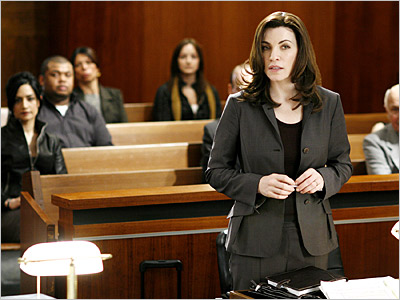
As an attorney, I’m not usually one for fictional courtroom dramas, probably for the same reasons that my cardiologist father never wanted to watch ER and the firefighters I know couldn’t stand the movie Backdraft.  It’s hard to enjoy a fictional work about a profession you live and breathe daily, especially when the dramatic plot twists make it almost laughably unrealistic.  (I have to admit that I make an exception for The Good Wife, as the topical  story lines and character development allow me to overlook the unrealistic courtroom scenes – most of the time.)

But as I read through the transcript of Tuesday’s hearing, I wondered whether I was being too hard on courtroom dramas.  In fact, if I had seen the kind of last minute shenanigans depicted in the transcript unfold in one of these television programs, I probably would have scoffed at the absurdity of it all.  When would the parties ever show up in front of a judge on the eve of trial  and argue over whether there was a need for a trial at all?  I wouldn’t have believed it; but reading the saga unfold in a real life transcript, I couldn’t put it down.  For those of you who don’t view hearing transcripts as page-turners, I will try to summarize the major takeaways from Tuesday’s hearing, with plenty of quotes thrown in to give you the flavor of the proceedings.

Rundown of May 8 Telephonic Hearing

Though buried in a slew of references to cases and statutes, the gist of the argument playing out on the phone before Judge Kapnick on Tuesday was that BofA wanted a ruling that there was going to be a full blown trial starting today on whether MBIA’s 2009 restructuring was improper, while MBIA and the NYID wanted the Judge to hold a “summary proceeding” and restrict the material that could be presented.  Essentially, MBIA and the NYID wanted the Judge to drive the proceedings, and restrict BofA to presenting only the evidence Her Honor determined she needed to evaluate a genuine issue of fact.  Each party relied on statements Kapnick made during the April 20 hearing to support its respective position.

BofA’s attorney, Robert Giuffra from Sullivan & Cromwell, stated that, “on April 20, the Court could not have been clearer that the parties were having a trial starting on May 14.”  (May 8 at 4:8-9.)  He focused on Kapnick’s use of the word “trial” during the prior proceeding, noting that Her Honor had used the word over 40 times and that BofA thus understood from the April 20 hearing that there would be a full trial.  (May 8 Hearing at 5:21-23.)  However, anyone who read that prior transcript or my prior article will recall that Kapnick used many different words to describe the proceeding that would begin this week, and indicated she didn’t place much importance on the name, saying:

I have made that very clear from the outset, that it is, whether you call it a trial, I said I don’t want to fight about the semantics, whether you call it a trial or a hearing with evidence. I think everybody understands.  (April 20 Hearing 44:18-22.)

Clearly, Her Honor was mistaken, because when MBIA attorney Marc Kasowitz, from Kasowitz Benson Torres & Friedman LLP, was allowed to respond, he stated that “nothing could be further from the truth,” as MBIA’s understanding was that the Court was going to hold an “Article 78 summary proceeding.” (May 8 Hearing at 8:3-7.)  Also drawing from statements Her Honor made at the April 20 Hearing, Kasowitz argued that,

the summary proceeding should go as the Court indicated in the last conference, i[n] that there should be argument by other lawyers, other parties, to present to the Court the evidence that has been adduced during the course of this proceeding.  And if there are issues of fact, if there is an issue of fact or issues of fact, then the Court can try those issues and if the Court would like to hear from witnesses, then the Court can say I would like to hear from some witnesses on some of the issues of fact… (May 8 Hearing 10:5-14.)

In her response to these widely differing views, Kapnick sought to clarify her position, saying, “Well, I mean, I guess this goes back to are there any issues of fact that need to be tried.  Obviously, this is not a trial de novo and this is not — I mean, I have a relatively simple ‘determination’ as to whether or not the Superintendent’s determination, the Department of Insurance’ determination was arbitrary and capricious…” (May 8 Hearing at 13:7-13.)  The Judge went on to note that she did not view the issue of whether the NYID’s decision was arbitrary and capricious itself as an issue of fact, but instead as the ultimate issue she would be asked to determine.

This explanation did little to placate the parties.  Eventually, the NYID’s attorney, David Holgado, from the Office of the New York Attorney General, was allowed to chime in, and largely supported MBIA’s position, noting,

the hearing that your Honor really was contemplating is…[one in which] your Honor should hear argument from the parties regarding the papers that have already been submitted and that you may, as Mr. Kasowitz pointed out, ask for submission of additional proof, which is the sum testimony that your Honor mentioned in addition to the ‘glorified oral argument’ that you envisioned for this hearing. We have no issue whatsoever with what your Honor stated at the April 20th conference and we certainly have been trying to follow it faithfully in preparation for trying it.  (May 8 Hearing at 15:15-16:3.)

Holgado also noted that the reason BofA was trying to turn the proceeding into a full blown trial was so that it could apply the formal rules of hearsay to exclude the affidavits presented by NYID staff and elicit their statements de novo.  Holgado referred to those arguments at “specious” and argued that the Court should “of course consider” the submissions that have already been made by the Department, at which point he was interrupted by Giuffra.  (May 8 Hearing at 19-20.)

However, Giuffra did not get far before being interrupted in turn by Kapnick, who challenged BofA’s attempts to strike portions of the administrative record:

But let me just interrupt you. I mean, I understand that on a trial, there are evidentiary rules.   But you can’t tell me that all of those affidavits are excluded now because maybe some of the things in them are — do not comport exactly with the evidentiary rules.   I mean, that I cannot accept.   I mean, I cannot accept that you’re not trying to throw out all of the documents that you just spent the past three years submitting.   That is part of the record.  (May 8 Hearing at 19:19-20:2.)

Kapnick also began to express frustration with BofA’s extreme position and their attempts to lock Her Honor into a ruling she didn’t believe she made, saying:

I mean, I don’t agree with you, Mr. Giuffra.  I mean, it is very nice that somebody went through and counted how many times the word trial was used in the transcript.  I don’t have the time to do that or the interest or maybe the court reporter put that in the end or something like that, but I envisioned not your standard trial, and I think that is what I said at the end, even though I said some type of trial, but sort of in quotation marks. (May 8 Hearing at 20:23-21:5)

So we know that we will be seeing a “trial” starting today, but it won’t necessarily look like your typical trial.  Of course, that begs the question: of what will this “trial” actually consist?  Ultimately, Kapnick attempted to articulate how she envisioned the May 14 proceeding, and it sounded awfully similar to the way MBIA and the NYID described it:

really, this is a presentation by you [BofA] as to why you believe that you have enough information to suggest that or to prove that, to support your petition that this determination by the State Insurance Fund was arbitrary and capricious and abuse of discretion.   I mean, that is really the standard that I am bound by, by Article 78.

If, as we are going through this, somehow there is an issue of fact, I mean, an issue of fact would be I thought that the Insurance Department had these 4,500 pages in front of them and now I learn they didn’t and there is an issue as to did they have them or didn’t they have them…

[I]f during the argument or during the presentation of your — of the case, through the motion and whatever else you want to say, that there are significant issues of fact that are raised, that then you think there should be some type of hearing or trial on that issue, then we will have to deal with that, but I don’t — I think that — I thought that I did not say this was a full blown trial that I might have in a lot of other cases because it is an Article 78 proceeding which usually does not have a trial…  (May 8 Hearing at 21:6-22:22.)

However, this did not stop the parties from continuing to argue their positions, and despite Her Honor’s repeated warnings about the need to wrap up the hearing, they went back and forth for several more rounds on the structure and nature of today’s “trial” before Kapnick had finally had enough.

Judge Kapnick Reaches Her Limit

Ultimately, even the most patient judge reaches a breaking point, and Judge Kapnick is no different.  For me, despite all of the fireworks between the parties, the most colorful aspects of Tuesday’s proceeding came from the Judge herself, who was clearly taken aback by the vitriol between the parties and their inability to agree to even the most basic issues:

I mean, nobody seems to listen to anything I said last time.   You all stuck to exactly your guns like we weren’t here for 65 pages  on the transcript.   You’re all interpreting it in certain ways.   I guess I hope that you would sort of understand what I was saying, but I guess you don’t.  (May 8 Hearing at 23:18-23.)

Later, Her Honor added,

I mean, you’re trying to pigeonhole me into calling something something that I have not said.  I will go back and read all 65 pages over the weekend, but that is not what I said…

So I mean, I never had so much time on a phone with whether it is a hearing or a preliminary injunction, a hearing, or a trial, or whatever.   I never have that and I mean, this is really a very unique situation. So I am sorry if I have not been as clear as you think I should have been.  Mea culpa.  (May 8 Hearing at 29:12-15; 31:8:13.) 

This building frustration finally boiled over when the parties could not even agree as to the order in which they would deal with issue’s at the start of today’s proceedings. After repeatedly warning the parties that time was short, and that she needed to break to give her staff time for lunch before her afternoon calendar, Her Honor finally reached her limit when the parties continued to argue over whether the judge would begin today’s “trial” by deciding evidentiary motions or deal first with determining the relevant issues of fact.  This is where the Judge finally stepped in:

I will tell you what.  I am really sorry that there is nothing you can agree on.  I am really very sorry.  I am not used to this and for lawyers of this caliber to disagree on every single thing, not cooperate with each other on anything. I don’t have time.   I am sorry, my court reporter is looking at me and I have to hang up.  (May 8 Hearing at 33:7-13.)

Ultimately, that is exactly what the judge did, over the parties’ continued efforts to get in a final word, saying “No.  Bye bye now.  I have to go.”  (May 8 Hearing at 35:10-11.)

If this level of contentiousness is any indication of the fireworks we will see at the Article 78 “trial” over the next few weeks, then we are in for some real life courtroom drama that would make the writers of The Good Wife proud.  So, as Terrell Owens says, “grab your popcorn.”  Bet-the-company litigation of the sort currently playing out between MBIA and BofA does not come along often, but when it does, the drama should be well worth watching.

[Author’s Note: I will not be able to attend the “trial” this week in New York, but if any loyal readers are in attendance, please email me or post comments with any thoughts, reactions, or particularly colorful moments – IMG]

Posted in Attorneys General, banks, bench trials, BofA, Countrywide, Insurance Department, Judge Barbara Kapnick, Judicial Opinions, lawsuits, liabilities, liquidity, litigation, MBIA, monoline actions, monolines, Regulators, restructuring | Tagged , , , , , , , | 1 Comment

MBIA on Winning Streak Heading into Trial on Restructuring Challenge

Monoline insurer MBIA, the most influential plaintiff in mortgage crisis litigation, has been on a roll lately in its lawsuits against Bank of America and other institutions over issues stemming from the subprime meltdown.  But MBIA will face its stiffest challenge yet next month, as a New York Superior Court judge has decided to hold a trial on the Article 78 challenge by three banks, including BofA, to the insurer’s 2009 restructuring.

With each passing month, MBIA has made progress in its RMBS lawsuits, putting it closer and closer to obtaining recoveries on its distressed portfolio of mortgage derivative insurance and ultimately emerging from the mortgage crisis as a viable entity.  But much of that may depend on the resolution of challenges to MBIA’s restructuring, including the upcoming proceeding under Article 78, a vehicle for challenging whether the decision of a body or officer was in excess of authority or an abuse of discretion.

The trial on that matter, which should focus primarily on the actions of New York’s insurance regulator rather than MBIA itself, is now set to go forward on May 14, 2012.  But if the trial results in the nullification of the 2009 restructuring, in which MBIA split its troubled structured finance business from its healthier municipal bond insurance business, MBIA could bear the brunt of the fallout.

Judge Barbara Kapnick, who should be a familiar name to readers of this blog as the jurist presiding over Bank of New York Mellon’s Article 77 proceeding to approve BofA’s $8.5 billion putback settlement, among others, will also preside over BofA’s Article 78 challenge.  At an April 20 hearing, Kapnick ruled that this challenge would proceed to a bench trial (meaning there is no jury and the judge acts as the factfinder), meaning that Her Honor will have sole authority to determine whether the New York Insurance Commissioner acted within its discretion in approving the restructuring.  Judging from the transcript of the hearing, Kapnick is seeking to hold a streamlined proceeding over a two-week period in which few experts will be introduced and the main focus is the decision-making process of the two primary players at the New York Insurance Department (NYID).  Read Alison Frankel’s excellent article comparing the similar standards of review in the Article 77 and 78 proceedings to see how Judge Kapnick may be hard-pressed to rule in favor of the banks under Article 78 by finding an abuse of discretion, without also finding an abuse of discretion in BNYM’s decision to settle Countrywide putback claims at a steep discount.

Regardless, MBIA heads into this trial riding high on a litigation winning streak that has put it in a strong negotiating position.  As plaintiff, MBIA has been scoring victory after victory in its suit against BofA and Countrywide over allegations that it was misled by the lender about the quality of loans MBIA was agreeing to insure.  As defendant, MBIA has managed to wrangle settlements with the vast majority of banks and funds that have challenged  its 2009 restructuring and the New York Insurance Commissioner’s decision to approve the same.  Just last week, MBIA settled one of the outstanding suits it faces concerning this overhaul, announcing that it had reached a deal with Aurelius Capital Management that resulted in the dismissal of the entire action.

As I’ve discussed, MBIA has been somewhat of a trailblazer for both monoline and investor plaintiffs wishing to sue the banks for deficient underwriting and for breaching their representations surrounding non-prime lending.  Having filed its suit against Countrywide (and later BofA) back in September 2008, MBIA was responsible for some of the earliest precedential ruling on key issues such as BofA’s successor liability, the use of statistical sampling to prove underwriting breaches and the propriety of the banks’ loss causation defenses.

More recently, MBIA has garnered a slew of victories on discovery issues, including winning permission from Judge Eileen Bransten to depose BofA CEO Brian Moynihan, to obtain BofA’s repurchase review documents, and to press ahead with discovery and trial on claims that BofA is on the hook for Countrywide’s liabilities as its successor-in-interest (the last two rulings were recently upheld by the First Department on appeal, see here and here).  Judge Bransten’s Order on the Moynihan deposition in particular demonstrates that Her Honor is tiring of BofA’s heel dragging on discovery, and is giving short shrift to its defenses regarding relevance and burden in favor of giving MBIA broad access to discovery.  I liked this line from Her Honor’s Order in particular: “Moynihan therefore has unique knowledge regarding his intentions and state of mind when he made statements about BAC’s responsibility for Countrywide’s liabilities, which are undoubtedly relevant to MBIA’s claim for successor liability.” (Order at 14.)

Bransten has scheduled another hearing for May 4 on whether to compel BofA to produce documents in two additional categories: 1) documents regarding BofA’s alleged assumption  of Countrywide liabilities and 2) documents BofA has withheld under an assertion of Bank Examiner privilege.  I expect the trend of discovery wins for MBIA to continue on both fronts.  With each additional win, MBIA is hoarding additional ammunition to use in summary judgment motions coming up in August and in ongoing settlement negotiations.

But MBIA’s strong position in its RMBS cases could be significantly undermined by the earlier resolution of the Article 78 proceeding in any manner that upsets the restructuring.  Though it can take solace in a favorable standard of review – essentially whether the NYID acted irrationally in approving the restructuring, given what it knew at the time – MBIA has a less favorable judge and some unpleasant evidence to contend with (including that it hid from the Insurance Commissioner a report by Lehman Bros. in the months prior to the restructuring, which suggested that MBIA had woefully insufficient reserves for losses on its CDO portfolio).  Though it’s uncertain how much of this evidence Judge Kapnick will consider when analyzing the NYID’s decision, what is certain is that an adverse judgment in the Article 78 proceeding, the first major civil trial stemming from the mortgage crisis, could raise questions about MBIA’s solvency and throw the company into turmoil.

Seemingly as a result, MBIA has adopted a tone of righteous indignation in its pleadings in the Article 78 proceedings.  The monoline can hardly contain its sense of outrage at having to defend its restructuring to the very banks that helped create the financial turmoil that necessitated the transaction.  This doozy of a final paragraph in the opening of its Sur-Reply brief has the distinct feel of being uttered by Jack Nicholson’s Colonel Nathan Jessup from A Few Good Men (at left), who scoffed at those who would rise and sleep under the blanket of the very freedom that he provides, and then question the manner in which he provides it.  See if you agree:

The Transformation was an effort in the public interest to ensure the availability of insurance in order to unfreeze the public finance markets.  It was accomplished without a dime of taxpayer funds.  It was reviewed for more than a year by dedicated professionals and approved by Superintendent Dinallo in the utmost good faith.  Contrary to the Banks’ egregiously false claims, no one “looted” anything or was enriched by it.  By contrast, the banking industry several years ago was bailed out with billions of dollars in taxpayer funds, after meetings over one weekend, to rescue it from the very financial crisis it played a major role in creating.  The Banks should not be heard to complain about what the NYID did here, and their Petition should be dismissed in its entirety.

Well, MBIA did not succeed in getting the plaintiffs’ petition dismissed, but neither did  plaintiffs succeed in getting Judge Kapnick to rule in their favor without a trial, despite a detailed and well-written brief by plaintiffs’ law firm, Sullivan & Cromwell.  So now it falls to Her Honor to listen to the evidence and decide whether to uphold or reverse the restructuring.  As I’ve said, Kapnick has indicated that she will take a narrow view of the evidence – focusing only on the reasonableness of the Insurance Commissioner’s conduct, and not that of MBIA.  As reported by Reuters, during the hearing to determine whether the case would go to trial, Her Honor said, “This case really addresses the actions of the insurance department in approving this transaction. It’s not a case about all these terrible intentional things, about concealing, [that MBIA is accused of having done].”

This certainly bodes well for MBIA – while also indicating that Kapnick may take the same deferential approach to BNYM in adjudicating the Trustee’s settlement under the restrictive guidelines of Article 77 (early returns on the hearing held today indicate that while Kapnick ruled the action will remain under Article 77, she will allow objections and may expand the scope of discovery).  I will keep you updated on developments in both actions as they arise, but suffice it to say that after almost four years of litigation, we are finally getting down to some significant merit-based determinations in this space, which will ultimately help to establish the allocation of losses from this monster of a crisis.

[Correction: a previous version of this story incorrectly identified the Article 78 plaintiffs’ law firm and the presiding judge in the second-to-last paragraph (hat tip reader C. Herzeca) – IMG]

Posted in Alison Frankel, allocation of loss, appeals, bailout, Bank of New York, banks, bench trials, BofA, bondholder actions, CDOs, contract rights, costs of the crisis, Countrywide, damages, discovery, global settlement, Government bailout, investors, Judge Barbara Kapnick, Judge Eileen Bransten, Judicial Opinions, lawsuits, liabilities, litigation, loss causation, MBIA, MBS, media coverage, monoline actions, monolines, private label MBS, putbacks, Regulators, rep and warranty, reserve reporting, responsibility, RMBS, settlements, statistical sampling, subprime, successor liability, The Subprime Shakeout, Trustees | 6 Comments